There's a hotbed of political debate around 457 visas at the moment, frequently getting the blame for unemployment levels. But what actually is a 457 visa, and how much of a mark are they really making on the employment landscape?
457 visas are Temporary Skilled Migrant Visa. In short they allow people come from other countries and work in Australia legally. The visas are usually issued in 2 year blocks, but they are almost always tied to a specific company, who sponsor the visa. So for example if McDonalds sponsor my visa, I can only work for McDonalds, and if I were to lose my job for whatever reason I would have to find another company to sponsor my visa or leave the country.
Sponsorship is a hassle. There's a lot of paperwork McDonalds has to lodge to justify why McDonalds need to hire someone from overseas rather than a local. But it's not a ridiculous amount of hassle either.
And once McDonalds have my 457 in place, they can hire me. I'm still subject to local salary awards and I still pay tax.
Why then do companies sponsor people if they have to pay the local award?
Well let me give a real life example. One of my clients was recently looking for a SAP XI consultant. I won't bore you with the finer details, but SAP is a heavy duty piece of software many large companies use to help manage all facets of their business - finance, sales, manufacturing, warehousing, HR, distribution, forecasting, etc, etc. And SAP XI is kind of like the glue of SAP - it helps SAP talk to other pieces of software.
This isn't something a piece of software you just install as a free download, and have a play with, and soon you get the hang of it. It's incredibly complicated, and is a niche domain in the IT industry.
Now experienced SAP people are hard to find, and XI people even harder. And they are expensive - think $150000/year expensive. Well that's what you play someone with lots of years SAP XI experience in the local IT industry. Way above any award.
However if you hire someone from India (a global IT hub) you can get them significantly cheaper. Think $80000/annum or so. Hell of a saving. Well worth doing a bit of paperwork. That's still miles above the award, but massively cheaper than the local option.
Now before anyone says it, being from India doesn't mean they are second rate. Yes they might have an accent, but nonetheless many are excellent communicators. and many have awesome technical skills. And the size & depth of the IT market in India makes it comparatively easy to find even hard to find skills. Like SAP XI. And there's an appetite for Indians to move to Australia - better pay, better lifestyle.
And those who come to Australia on a 457 often transition across to a Permanent Residency Visa, which entitles people to stay out here for good.
So there's a second wave effect of the 457s. People who have just gotten permanent residency can swap jobs and are looking to do better than the $80000 they are getting paid. So they are very open to roles paying $110000 or so. No paperwork hassles, and these guys now have some local experience and are acclimatised to the Australian workplace. Far easier to hire, and a more attractive prospect for Australian employers. and 12 months later they'll have even more local experience, and will probably move for $130K or so. Still cheaper than the locals.
But at what point to people become "locals"? Unless you're an aborginal or islander, your family arrived here at some point on a plane or a boat. Two years? Five years? It's all pretty arbitrary.
So that's 457s. Are they impacting the local job market? IMO yes, but it's the second and third wave effects that are having the major impacts. And it's really only impacting on jobs where salaries are massively out of step with awards.
Tuesday, November 29, 2016

Friday, January 29, 2016
Newstart - Fail
So I had a brief stint of unemployment recently. I had been working on contract with global recruitment firm Adecco in Townsville, but a global impairment charge of $500 million euro (http://www.reuters.com/article/adecco-results-idUSFWN12Z09620151105), $125 million (AUD) of which got written down to the Australian business. Not ideal given they were only a break even operation in Australia. Belts were tightened, and as a result, my contract wound up. Hiring a recruiter is an expensive business. Basically it takes at least 12-18 months to build the sort of business relationships that bear fruit, so a new recruiter will be a loss maker for that 18 months.
I’m a big boy. That’s business. But it left me on the sidelines at an awkward time. 6 weeks out from Christmas, in a small market like Townsville (which has a healthy recruitment industry, but it’s a small pond compared to Sydney or Melbourne). Chances are I’d be off at least until the new year.
So I figured I’d register for the dole. The rock and roll. Or Newstart, as it’s current guise is called. I’d never actually been on the dole. Not that I needed the cash - thankfully I had enough financial fat to live on in the short term. But I’ve paid taxes for the last 16 years, and I was actively hunting for work not bludging. Why not register for the dole?
Now, as I pen this in late January, I have secured a new permanent role with Drake International (as a recruiter cum HR consultant). I never actually got a penny of Newstart allowance. I went through the full registration process though, so I feel entirely qualified to comment on its flaws (or at least the initial phases of the process).
First thing is the rules regarding Newstart. They are as clear as mud. My guess is the government keeps them deliberately opaque to try thwart any dole bludging, and to stop challenges on rulings. Problem being one has no idea whether one is entitled to any payments, so your only option is to apply in order to find out. Which creates a huge amount of work for both the individual (to put in the claim) and Centrelink (to assess it). I’m not to this day sure why I didn’t receive any Newstart. My guess is I had too many liquid assets (over $2500 in the bank) for Newstart to kick in until I’d been unemployed for 3 months, but that’s a theory I’ve only managed to piece together having trolled through a bunch of forums and news articles (such as this one http://www.abc.net.au/news/2011-10-31/sloan-newstart-needs-a-boost/3609716)
Part of the process is also to meet with an employment service provider (who will remain nameless). They pull together a job search plan, but it’s an incredibly stupid plan doomed to fail. They wanted me to apply for 20 roles a month. So I said there aren’t 20 roles per month that suit my background and experience (I was targeting Recruiting and HR roles). Their response “You can’t do the job of a doctor, but you can do the job of a cleaner, so apply for cleaner jobs”. Seriously. They didn’t review my CV. they didn’t try provide any interview guidance, didn’t suggest any employers to touch base with, just printed off the job search plan template.
As a recruiter, I can say with absolutely certainty this is a complete waste of time, for both the candidate and the employer. The list of reasons is nigh on endless. Here are some of the key ones: I’d hate a cleaner position and I doubt I’d be very good at it as a result, it won’t pay enough to cover my responsibilities in life, even if I took the job I’d be continuing to search for recruiter/HR roles (so would be unlikely to stay in a role), employers would (rightly) baulk at my CV knowing I’m far from well suited for the role - employers want to hire people with a proven stable track record in the industry at hand, not someone who may or may not adapt, and is unlikely to stay.
So the job search “plan" gets the candidate to send out more applications for roles they don’t want and won’t get, and fills the employers inbox with unsuitable people who don’t really want the job. Smart. No, really……
It’s a program that has been designed around putting hurdles in the way of the dole bludgers trying to milk benefits, not around actually helping people find decent jobs that suit their background. Madness, and an utter waste of Government money.
Applying for even 200 roles doesn’t help one iota if they aren’t roles that sit on your experience well. It’s not a simple numbers game.
And the roles also need to match your career trajectory. Companies don’t want to hire a CFO to do an accounts payable role. That’s not going to work for any party long term.
Far smarter idea would be to run a bunch of 1 hour seminars: covering CV preparation, cover letters, where to look for jobs, MS Office basics, training options and interviewing skills. Useful skills that assist those actually trying to find work. You can monitor attendance to provide some checks and balances for catching the bludgers.
And make the Newstart rules clearer and easier to find. It’ll save work across the board.
Gear the system around those trying to actually find work, not trapping those looking for a handout.
Friday, January 15, 2016
Challenges of a candidate rich market
When the job market is healthy and unemployment is low, good candidates are hard to find. That’s referred to as a candidate poor market. Using a recruiter makes sense - they have the established networks and relationships to make sourcing quality candidates possible even in a tight market.
So what happens in a candidate rich market and relatively high unemployment (as we currently see in Townsville, where i’m now based). Some might think that recruiters are superfluous to requirements in such a market.
Not really, is the short answer. For a few reasons.
First reason is companies want and need to hire the *best* person that’s available in the market. Just because you get a lot more ad response, that doesn’t mean the best person in the market will be among them. In fact a lot of top people tend to hunker down that bit more in a fragile job market, perhaps parking their job hunting. You need to ensure your company’s job opportunity is being presented to them, and presented well, to get them engaged with the role and allay any concerns. Hiring the best people is what will escalate your business above the competition.
And as I’ve commented on before, there’s no barrier to applying to roles via Seek. The lion’s share of the extra ad response generated in a depressed market will stem from unsuitable people. Even if there is some quality ad response, you’ll have to dig and dig hard to find it. That creates an administrative burden for your business, one that can potentially hurt your brand if not managed diplomatically and professionally. Another reason to use a recruiter. They create a buffer between your business and the market place, and also relieve that administrative burden allowing you to focus on your core business.
And it’s worth remembering the very economic drivers that typically trigger high unemployment and a candidate rich market, are ones that will probably be having an impact on the bottom line of your business. That’s the time you want to be focusing on core business activities and escalating your business above the competition.
Monday, May 18, 2015
Age of Middlemen
Recruiters are often labelled as middlemen. I actually think it's an apt description and am quite comfortable with it, though it's often used by many in quite a caustic, derogatory tone. They feel we don't add value. Bit strange given our clients opt to use our services and willingly pay our fees....
Anyway I came across this pic on LinkedIn, and I think it makes an excellent point: you don't have to deliver the end service to add value. Uber, AirBnB, eBay, Facebook - all are simply facilitators, intermediaries, or yes, middlemen, but few would dispute they aren't immensely valuable businesses (and many have the share prices to prove it)
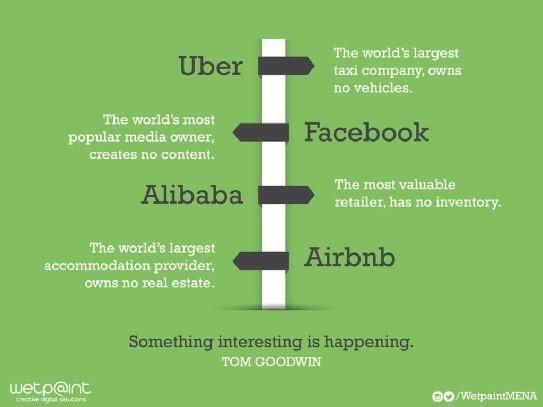
So right now, it's an age of middlemen. And the introductions Recruiters make have immense value.
Anyway I came across this pic on LinkedIn, and I think it makes an excellent point: you don't have to deliver the end service to add value. Uber, AirBnB, eBay, Facebook - all are simply facilitators, intermediaries, or yes, middlemen, but few would dispute they aren't immensely valuable businesses (and many have the share prices to prove it)
So right now, it's an age of middlemen. And the introductions Recruiters make have immense value.
Friday, March 20, 2015
Best Candidate vs Best on paper
Interesting conundrum this one. Do you sent the candidate that you feel is the best fit for your client's role or the one you think looks best on paper?
It's an issue because may employers go out to two or three agencies (or in the cast of some Government Departments, well over 10). So they are going to create an interview shortlist from all the agency shortlists (typically capped at 3 candiates/agency). And as much as we might wax lyrical about the qualities of Mr Best Fit, they often end up on the cutting room floor at that interview shortlisting, and and never actually get to interview.
You're better off sending Ms Best on Paper. At least they get to interview.
The irony is the best candidates often don't have the perfect CVs. They've been more willing to jump roles (looking for new challenges), be that bit more daring and entrepreneurial, and perhaps have steered clear of the big end of town (finding the environments overly structured). Net result being their CV often looks jumpy, without a simple & clean career trajectory, and lacks that big shop experience.
The best clients/employers though only partner with one agency, so as a recruiter you can get on the phone to the manager and explain why they should meet Mr Best Fit. The recruitment panel structure (where a company works with multiple agencies) works well in theory, but is death for Mr Best Fit's chances. Shame but true.
It's an issue because may employers go out to two or three agencies (or in the cast of some Government Departments, well over 10). So they are going to create an interview shortlist from all the agency shortlists (typically capped at 3 candiates/agency). And as much as we might wax lyrical about the qualities of Mr Best Fit, they often end up on the cutting room floor at that interview shortlisting, and and never actually get to interview.
You're better off sending Ms Best on Paper. At least they get to interview.
The irony is the best candidates often don't have the perfect CVs. They've been more willing to jump roles (looking for new challenges), be that bit more daring and entrepreneurial, and perhaps have steered clear of the big end of town (finding the environments overly structured). Net result being their CV often looks jumpy, without a simple & clean career trajectory, and lacks that big shop experience.
The best clients/employers though only partner with one agency, so as a recruiter you can get on the phone to the manager and explain why they should meet Mr Best Fit. The recruitment panel structure (where a company works with multiple agencies) works well in theory, but is death for Mr Best Fit's chances. Shame but true.
Tuesday, July 22, 2014
Don't shoot the Messenger
We recently had a client (i.e. the company) shorten a contract offer from an anticipated three months back to one month.
Rather frustrating when that happens. It's a license for the deal to die - we appreciate there's a massive difference between an offer of 4 weeks and 13, and candidates understandably don't like it. We also make less money out of a short contract (here's how recruitment fees work). And if the candidate doesn't accept the offer we don't make a cent.
And we do counsel clients not to go down this path. Same with offering a lower salary that we put candidates forward at. It's got a high chance of ending badly. We call this low balling.
Thing is, low ball offers have a nasty habit of working. Some people falsely jack up their asking price when they would actually be happy with a lower number. Hence clients often try to low ball/drive a hard bargain (be it on dollars, contract duration, etc).
So we don't like it - we'd far rather companies offer the expected dollars and tenures - but it quite often it works out. And the client is paying the bill and is in the driver's seat (paying the salary or daily rate), so often insist we go down this path of their behalf.
So it's kind of annoying when the candidate blows up and holds us responsible. We'd much prefer the company just offered what you'd requested and we had discussed with them. That way we get deals done & get paid for our work. We don't submit candidates that aren't within the budget they specify in the first place.
So please keep this in mind when a low ball offer comes your way via a recruiter.
Rather frustrating when that happens. It's a license for the deal to die - we appreciate there's a massive difference between an offer of 4 weeks and 13, and candidates understandably don't like it. We also make less money out of a short contract (here's how recruitment fees work). And if the candidate doesn't accept the offer we don't make a cent.
And we do counsel clients not to go down this path. Same with offering a lower salary that we put candidates forward at. It's got a high chance of ending badly. We call this low balling.
Thing is, low ball offers have a nasty habit of working. Some people falsely jack up their asking price when they would actually be happy with a lower number. Hence clients often try to low ball/drive a hard bargain (be it on dollars, contract duration, etc).
So we don't like it - we'd far rather companies offer the expected dollars and tenures - but it quite often it works out. And the client is paying the bill and is in the driver's seat (paying the salary or daily rate), so often insist we go down this path of their behalf.
So it's kind of annoying when the candidate blows up and holds us responsible. We'd much prefer the company just offered what you'd requested and we had discussed with them. That way we get deals done & get paid for our work. We don't submit candidates that aren't within the budget they specify in the first place.
So please keep this in mind when a low ball offer comes your way via a recruiter.
Tuesday, May 6, 2014
Throw straight dice in your CV
It's tempting to try make your role look bigger and more heavy duty. Some classic examples of that include:
I'm sure a candidate thinks by increasing their team size to 12 from 7 is relatively harmless, and increases their appeal. Companies are though incredibly sensitive about putting someone they feel is too big for the position X. The concern becomes that you will become bored in the role quickly and won't stay long term. So as much as jacking up your experience might make you seem a better fit for a bigger role (which will probably put you up against tougher competition) it may well kill you for the smaller roles.
The term consultant sounds sexy and important, which is why consulting firms use it. Good luck justifying $1000/day for a junior tester or helpdesker otherwise. But in CV land the term seems ambiguous and vague, and like you are trying to overblow your experience. Far better off using a title like project manager or analyst programmer which actually has real meaning, regardless of what was written on your business card or invoices.
- Increasing the size of the team "you managed" or the budget you looked after
- Using the incredibly vague term consultant instead of a title that captures the nature of your role
I'm sure a candidate thinks by increasing their team size to 12 from 7 is relatively harmless, and increases their appeal. Companies are though incredibly sensitive about putting someone they feel is too big for the position X. The concern becomes that you will become bored in the role quickly and won't stay long term. So as much as jacking up your experience might make you seem a better fit for a bigger role (which will probably put you up against tougher competition) it may well kill you for the smaller roles.
The term consultant sounds sexy and important, which is why consulting firms use it. Good luck justifying $1000/day for a junior tester or helpdesker otherwise. But in CV land the term seems ambiguous and vague, and like you are trying to overblow your experience. Far better off using a title like project manager or analyst programmer which actually has real meaning, regardless of what was written on your business card or invoices.
Subscribe to:
Posts (Atom)