Recruiters are often labelled as middlemen. I actually think it's an apt description and am quite comfortable with it, though it's often used by many in quite a caustic, derogatory tone. They feel we don't add value. Bit strange given our clients opt to use our services and willingly pay our fees....
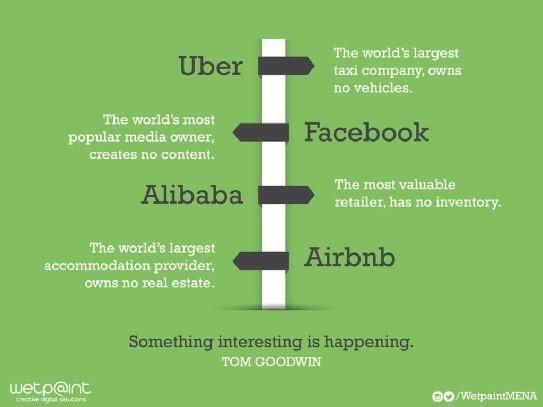
Anyway I came across this pic on LinkedIn, and I think it makes an excellent point: you don't have to deliver the end service to add value. Uber, AirBnB, eBay, Facebook - all are simply facilitators, intermediaries, or yes, middlemen, but few would dispute they aren't immensely valuable businesses (and many have the share prices to prove it)
So right now, it's an age of middlemen. And the introductions Recruiters make have immense value.
Pimps. Blood Suckers. Ambulance Chasers. Scum. Some of the words I've heard used to describe Recruiters by those within Australian industry.
Often though I've found that hostility or hatred is underpinned by misconceptions about how the recruitment industry works......
Monday, May 18, 2015
Friday, March 20, 2015
Best Candidate vs Best on paper
Interesting conundrum this one. Do you sent the candidate that you feel is the best fit for your client's role or the one you think looks best on paper?
It's an issue because may employers go out to two or three agencies (or in the cast of some Government Departments, well over 10). So they are going to create an interview shortlist from all the agency shortlists (typically capped at 3 candiates/agency). And as much as we might wax lyrical about the qualities of Mr Best Fit, they often end up on the cutting room floor at that interview shortlisting, and and never actually get to interview.
You're better off sending Ms Best on Paper. At least they get to interview.
The irony is the best candidates often don't have the perfect CVs. They've been more willing to jump roles (looking for new challenges), be that bit more daring and entrepreneurial, and perhaps have steered clear of the big end of town (finding the environments overly structured). Net result being their CV often looks jumpy, without a simple & clean career trajectory, and lacks that big shop experience.
The best clients/employers though only partner with one agency, so as a recruiter you can get on the phone to the manager and explain why they should meet Mr Best Fit. The recruitment panel structure (where a company works with multiple agencies) works well in theory, but is death for Mr Best Fit's chances. Shame but true.
It's an issue because may employers go out to two or three agencies (or in the cast of some Government Departments, well over 10). So they are going to create an interview shortlist from all the agency shortlists (typically capped at 3 candiates/agency). And as much as we might wax lyrical about the qualities of Mr Best Fit, they often end up on the cutting room floor at that interview shortlisting, and and never actually get to interview.
You're better off sending Ms Best on Paper. At least they get to interview.
The irony is the best candidates often don't have the perfect CVs. They've been more willing to jump roles (looking for new challenges), be that bit more daring and entrepreneurial, and perhaps have steered clear of the big end of town (finding the environments overly structured). Net result being their CV often looks jumpy, without a simple & clean career trajectory, and lacks that big shop experience.
The best clients/employers though only partner with one agency, so as a recruiter you can get on the phone to the manager and explain why they should meet Mr Best Fit. The recruitment panel structure (where a company works with multiple agencies) works well in theory, but is death for Mr Best Fit's chances. Shame but true.
Tuesday, July 22, 2014
Don't shoot the Messenger
We recently had a client (i.e. the company) shorten a contract offer from an anticipated three months back to one month.
Rather frustrating when that happens. It's a license for the deal to die - we appreciate there's a massive difference between an offer of 4 weeks and 13, and candidates understandably don't like it. We also make less money out of a short contract (here's how recruitment fees work). And if the candidate doesn't accept the offer we don't make a cent.
And we do counsel clients not to go down this path. Same with offering a lower salary that we put candidates forward at. It's got a high chance of ending badly. We call this low balling.
Thing is, low ball offers have a nasty habit of working. Some people falsely jack up their asking price when they would actually be happy with a lower number. Hence clients often try to low ball/drive a hard bargain (be it on dollars, contract duration, etc).
So we don't like it - we'd far rather companies offer the expected dollars and tenures - but it quite often it works out. And the client is paying the bill and is in the driver's seat (paying the salary or daily rate), so often insist we go down this path of their behalf.
So it's kind of annoying when the candidate blows up and holds us responsible. We'd much prefer the company just offered what you'd requested and we had discussed with them. That way we get deals done & get paid for our work. We don't submit candidates that aren't within the budget they specify in the first place.
So please keep this in mind when a low ball offer comes your way via a recruiter.
Rather frustrating when that happens. It's a license for the deal to die - we appreciate there's a massive difference between an offer of 4 weeks and 13, and candidates understandably don't like it. We also make less money out of a short contract (here's how recruitment fees work). And if the candidate doesn't accept the offer we don't make a cent.
And we do counsel clients not to go down this path. Same with offering a lower salary that we put candidates forward at. It's got a high chance of ending badly. We call this low balling.
Thing is, low ball offers have a nasty habit of working. Some people falsely jack up their asking price when they would actually be happy with a lower number. Hence clients often try to low ball/drive a hard bargain (be it on dollars, contract duration, etc).
So we don't like it - we'd far rather companies offer the expected dollars and tenures - but it quite often it works out. And the client is paying the bill and is in the driver's seat (paying the salary or daily rate), so often insist we go down this path of their behalf.
So it's kind of annoying when the candidate blows up and holds us responsible. We'd much prefer the company just offered what you'd requested and we had discussed with them. That way we get deals done & get paid for our work. We don't submit candidates that aren't within the budget they specify in the first place.
So please keep this in mind when a low ball offer comes your way via a recruiter.
Tuesday, May 6, 2014
Throw straight dice in your CV
It's tempting to try make your role look bigger and more heavy duty. Some classic examples of that include:
I'm sure a candidate thinks by increasing their team size to 12 from 7 is relatively harmless, and increases their appeal. Companies are though incredibly sensitive about putting someone they feel is too big for the position X. The concern becomes that you will become bored in the role quickly and won't stay long term. So as much as jacking up your experience might make you seem a better fit for a bigger role (which will probably put you up against tougher competition) it may well kill you for the smaller roles.
The term consultant sounds sexy and important, which is why consulting firms use it. Good luck justifying $1000/day for a junior tester or helpdesker otherwise. But in CV land the term seems ambiguous and vague, and like you are trying to overblow your experience. Far better off using a title like project manager or analyst programmer which actually has real meaning, regardless of what was written on your business card or invoices.
- Increasing the size of the team "you managed" or the budget you looked after
- Using the incredibly vague term consultant instead of a title that captures the nature of your role
I'm sure a candidate thinks by increasing their team size to 12 from 7 is relatively harmless, and increases their appeal. Companies are though incredibly sensitive about putting someone they feel is too big for the position X. The concern becomes that you will become bored in the role quickly and won't stay long term. So as much as jacking up your experience might make you seem a better fit for a bigger role (which will probably put you up against tougher competition) it may well kill you for the smaller roles.
The term consultant sounds sexy and important, which is why consulting firms use it. Good luck justifying $1000/day for a junior tester or helpdesker otherwise. But in CV land the term seems ambiguous and vague, and like you are trying to overblow your experience. Far better off using a title like project manager or analyst programmer which actually has real meaning, regardless of what was written on your business card or invoices.
Wednesday, February 26, 2014
Qantas: the canary in the mine for Australian business?
So today Qantas announced it lost $235 milllion in the first half of this financial year (vs. a mere $109 million for the first 6 months of the previous financial year). And off the back of that the CEO has announced 5000 job cuts. The full SMH article on the topic can be found here.
I can't help but think the struggles of Qantas mirror the own challenges our economy faces, it just happen to be very high profile and toward the front of the queue (hence it makes a rather good & useful canary in Australia's own economic mine shaft).
Rewind 6 years and Qantas was an exceptionally successful business - It made $970 million profit in 2008. Things have changed since 2008 though. The Aussie dollar has gotten stronger (it's spent much of last year over $1US vs 60 to 80 cents in 2008) and that makes going overseas far more attractive to tourists (which doesn't automatically help Qantas - there are a plethora of international airline options, unlike flying domestic ) and makes the cost of keeping jobs in Australia very expensive (compared to offshoring them, which other airlines routinely do). Even high skill roles can be done and done well off shore, often as cheaply as 10-20% of what you'd pay locally.
It's not just the cost either. There's a quality issue. Customer Service roles have traditionally been seen as rather entry level and menial in Australia. Offshore they are a highly sought after career option. Here you kind of make the best of who is left, offshore you pick from the cream of the crop. Hence one often has incredibly mixed customer experiences dealing with local customer service depending on whether you get someone keen and switched on, or someone only working there under sufferance because they can't find a"decent" job. I seem to see many a friend bitching about Qantas customer service on social media.
The numbers I've been told are quite striking. Most international carriers make about $80-90 per passenger per flight. For Qantas, it's more like $10. That's a wafer thin margin.
Labour costs & quality and the high Aussie dollar are making Australia uncompetitive (look at SPC, Toyota, Holden - this goes beyond Qantas). The bad news is this has the potential to go well beyond these businesses - Banks, Telcos and IT vendors have been doing it on the quiet for years, just without the publicity. Companies are realising just how portable many roles are (even high skill ones), and many offshoring businesses have refined their business model, so offshore is no longer a euphemism for bad service. Often quite the contrary.
For the last 10 years the mining boom has buffered the so far limited the impact of offshoring. Mining has created more jobs than have been lost offshore. But with the mining boom now on the wane, we might realise the full impact. I can't believe that we waste so much time and effort worrying about turning back refugee boats and repealing the carbon tax. We need to work out what Australia can do well into the future, focus on that & articulate that vision to the people and the global business community.
Other than that I'm not 100% sure what the solution is. The Aussie dollar dropping helps, but it's not the fix on it's own. Australia needs to become cheaper place to do business, and I also think people need to reset their feelings on what represents a good salary, reasonable career progression and a decent job. If we don't do it, I have a nasty feeling the market might do it for us.
I can't help but think the struggles of Qantas mirror the own challenges our economy faces, it just happen to be very high profile and toward the front of the queue (hence it makes a rather good & useful canary in Australia's own economic mine shaft).
Rewind 6 years and Qantas was an exceptionally successful business - It made $970 million profit in 2008. Things have changed since 2008 though. The Aussie dollar has gotten stronger (it's spent much of last year over $1US vs 60 to 80 cents in 2008) and that makes going overseas far more attractive to tourists (which doesn't automatically help Qantas - there are a plethora of international airline options, unlike flying domestic ) and makes the cost of keeping jobs in Australia very expensive (compared to offshoring them, which other airlines routinely do). Even high skill roles can be done and done well off shore, often as cheaply as 10-20% of what you'd pay locally.
It's not just the cost either. There's a quality issue. Customer Service roles have traditionally been seen as rather entry level and menial in Australia. Offshore they are a highly sought after career option. Here you kind of make the best of who is left, offshore you pick from the cream of the crop. Hence one often has incredibly mixed customer experiences dealing with local customer service depending on whether you get someone keen and switched on, or someone only working there under sufferance because they can't find a"decent" job. I seem to see many a friend bitching about Qantas customer service on social media.
The numbers I've been told are quite striking. Most international carriers make about $80-90 per passenger per flight. For Qantas, it's more like $10. That's a wafer thin margin.
Labour costs & quality and the high Aussie dollar are making Australia uncompetitive (look at SPC, Toyota, Holden - this goes beyond Qantas). The bad news is this has the potential to go well beyond these businesses - Banks, Telcos and IT vendors have been doing it on the quiet for years, just without the publicity. Companies are realising just how portable many roles are (even high skill ones), and many offshoring businesses have refined their business model, so offshore is no longer a euphemism for bad service. Often quite the contrary.
For the last 10 years the mining boom has buffered the so far limited the impact of offshoring. Mining has created more jobs than have been lost offshore. But with the mining boom now on the wane, we might realise the full impact. I can't believe that we waste so much time and effort worrying about turning back refugee boats and repealing the carbon tax. We need to work out what Australia can do well into the future, focus on that & articulate that vision to the people and the global business community.
Other than that I'm not 100% sure what the solution is. The Aussie dollar dropping helps, but it's not the fix on it's own. Australia needs to become cheaper place to do business, and I also think people need to reset their feelings on what represents a good salary, reasonable career progression and a decent job. If we don't do it, I have a nasty feeling the market might do it for us.
Wednesday, February 12, 2014
The difference 1% makes
2014: There's plenty to be encouraged by if you're a job seeker. I've usually been rather cynical about recruiters spouting next year will be better, as often there's nothing more underpinning it than plain old hope this year will be better. But business confidence is up in the recent CBA Future Business Index - that's a good sign. Indeed the index is at an all time high point. Admittedly the index is only 3.5 years old but nonetheless. Our business is also rather busy given the time of year (Jan/Feb is historically a flatspot in recruitment land - too many hiring managers away through January) and the recruiters we are speaking to have similar stories.
As much as these signs bode well for the year ahead, we still sit at 5.8% unemployment,so don't expect the phone to be going nuts or salaries to be on the march for a while yet. I'm still quite amazed how much easier it is to find quality, experienced people when unemployment sits at or close to 6% as compared to 5%, and we'll have to whittle that 5.8% down before the market hits top gear.
And that means it will remain nigh on impossible to secure a move AND a step up with a salary increase at the same time. That kind of thing only happens at the top of the market.
As much as these signs bode well for the year ahead, we still sit at 5.8% unemployment,so don't expect the phone to be going nuts or salaries to be on the march for a while yet. I'm still quite amazed how much easier it is to find quality, experienced people when unemployment sits at or close to 6% as compared to 5%, and we'll have to whittle that 5.8% down before the market hits top gear.
And that means it will remain nigh on impossible to secure a move AND a step up with a salary increase at the same time. That kind of thing only happens at the top of the market.
Monday, November 11, 2013
One Factor that might be contributing to Recruitment agency frustration...
On any given job you apply for, your odds of landing the role are pretty low. Even for a good candidate, maybe one in every 7 or 8 applications leads to interviews, one in every 15 or 20 to a job offer.
That makes for a lot of wasted effort and frustration.
It's probably a safe bet that over half of these roles are being advertised by recruitment agencies. Different agencies, but we all kind of look the same to candidates. As such recruitment agencies become the common factor in people's frustration during the job hunt.
People don't though realise their application is in fact far more likely to disappear down a black hole when they apply direct, as it's a rarity to apply multiple times with the same organisation, and as a result they don't see the pattern.
My wife was in the job market recently, and she kept a close track of responses for direct and via agency. She definitely got faster response via Agency (and by response I mean a phone call, not a generic auto-response). It was an interesting exercise. Yes, some applications did go into the black hole for some agency roles, but far less than with direct.
So are you guilty bundling all agencies into one basket?
That makes for a lot of wasted effort and frustration.
It's probably a safe bet that over half of these roles are being advertised by recruitment agencies. Different agencies, but we all kind of look the same to candidates. As such recruitment agencies become the common factor in people's frustration during the job hunt.
People don't though realise their application is in fact far more likely to disappear down a black hole when they apply direct, as it's a rarity to apply multiple times with the same organisation, and as a result they don't see the pattern.
My wife was in the job market recently, and she kept a close track of responses for direct and via agency. She definitely got faster response via Agency (and by response I mean a phone call, not a generic auto-response). It was an interesting exercise. Yes, some applications did go into the black hole for some agency roles, but far less than with direct.
So are you guilty bundling all agencies into one basket?
Subscribe to:
Posts (Atom)
